- 12/11/2025
- 3min
When the car makes noises: Searching for causes and solutions
Squealing without bucking when braking
Possible cause:
- Worn brake pads
- Brake disks undersized or a burr/edge on disk
- Small stone between brake pad and disk
- Flash rust on the brake disks
- Insufficient lubrication of the brake mechanism
Solution:
- Have the brake pads and disks checked for damage, wear and safety, and replace them if necessary.
- If there is light rust (flash rust), a short drive often helps to free up the brake pads.
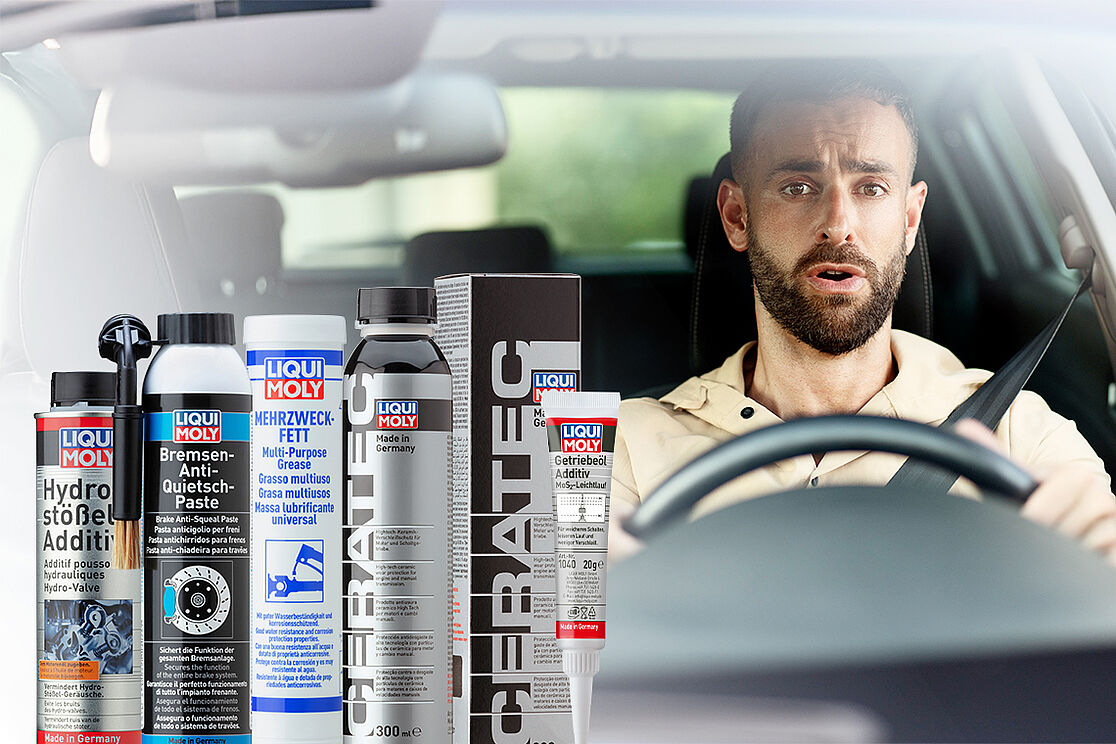
- For optimum braking performance and protection against corrosion, we recommend our Brake Anti-Squeal Paste. It reduces friction noise, protects the brake mechanism and ensures optimal lubrication of the moving brake components.

Rattling or loud noises in the engine compartment
Possible causes:
- Loose parts or brackets
- Hydraulic tappets clattering during cold start
- Timing chain or chain tensioner rattling or making other noises
- Worn-out engine bearings
- Deposits in the oil circuit
Solution:
- Check that all screws and brackets are tight.
- If there are vibrations and unusual jolting, the engine bearings may be worn or deteriorated – replacement is the only solution.
- For a clean oil circuit and less noise, we recommend using our Engine Flush before the oil change. It removes deposits in the oil circuit and ensures smoother engine operation.
- If the hydraulic tappets clatter during a cold start while the oil pressure is building up, the Hydraulic Lifter Additive can be used to counteract this.
- If the timing chain rattles, it should be checked by a specialist workshop and replaced if necessary.
- Extra tip: Cera Tec as an oil additive reduces friction and protects against wear – ideal for quieter and smoother engine operation.
Whistling, howling or jolting while driving
Possible causes:
- Defective wheel bearing
- Imbalance in the tires
- Shock absorbers faulty or coil spring broken
- Problems in the transmission or differential
Solution:
- Check the tires for damage and correct air pressure.
- Check whether the shock absorber is leaking oil or is damaged and whether the coil spring is broken.
- In the case of periodic rhythmic jolting and loud driving noises, a wheel bearing may be worn and should be replaced as soon as possible.
- If the howling and whistling noises persist, the transmission may be affected – this is where the workshop comes in.
- For transmissions and differentials, we recommend our Gear-Oil Additive, which reduces wear and minimizes noise.

Cracking and whirring noises when steering
Possible causes:
- Steering joints or drive shafts worn
- Steering gear defective, power steering leaking, too little oil or worn/aged oil
- Lack of lubrication
Solution:
- Check the joints and dust boots and have them replaced if necessary.
- Have the steering gear and power steering checked.
- For optimal lubrication and protection, we recommend our Multipurpose Grease for moving parts.

Summary
Noises in the car are not only annoying, but often an indication that maintenance is required. By regularly maintaining your vehicle and using the right products from LIQUI MOLY, you can prevent many issues, save money on costly repairs, and extend the lifespan of your vehicle.